Wood Siding Rot Repair: By Siding Type
By STOP THE ROT CO.
Wood siding rot repair vancouver looks different depending on what kind of siding is actually on the wall. Each common type fails at a different point for a different reason, and the repair-or-replace math follows accordingly.
Lap (Clapboard) Siding
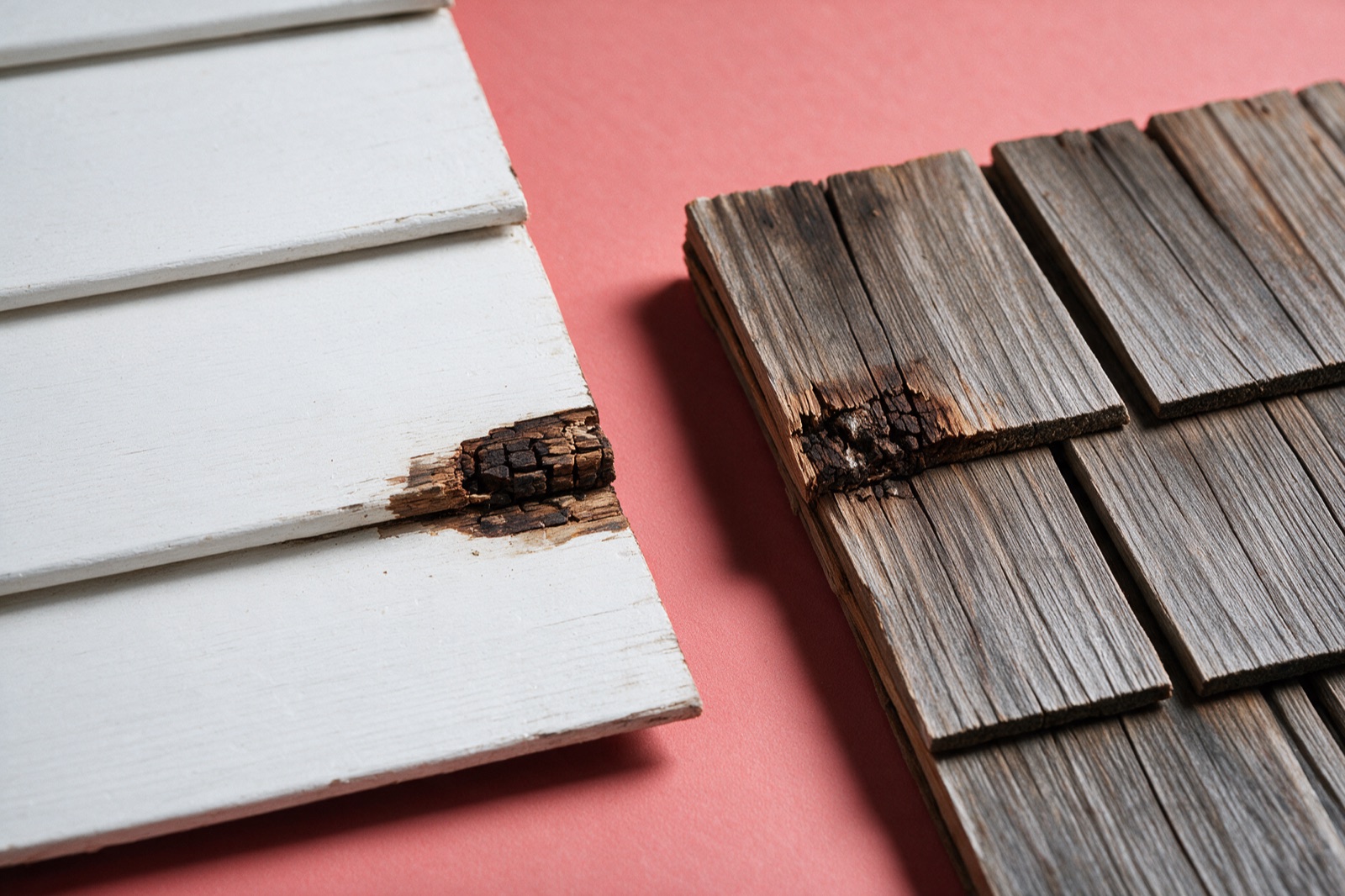
Horizontal overlapping boards fail predictably at two points: the overlap itself, where water can track behind the lap if the reveal isn’t sufficient to shed it cleanly, and the butt ends where two boards meet, exposed end grain that absorbs moisture faster than the flat face of the board. Individual boards are generally independently replaceable, similar to deck boards, so a repair rarely needs to extend beyond the specific affected boards unless the sheathing behind them is also involved.
Cedar Shingles and Shakes
Cedar shingle and shake siding is a genuinely iconic material in Vancouver and across the Pacific Northwest, and its natural rot resistance comes from thujaplicin concentrated in the heartwood, covered in more depth in our guide on best wood species for rot resistance. That resistance isn’t unlimited, though, shingles cut from sapwood, or heartwood shingles kept consistently shaded and damp, particularly in tree-heavy neighborhoods, can still develop rot over time, most often at the exposed butt edge. Individual shingle replacement is a straightforward, contained repair in most cases, one of the more forgiving siding types to work on precisely because each shingle is its own independent unit.
Board and Batten
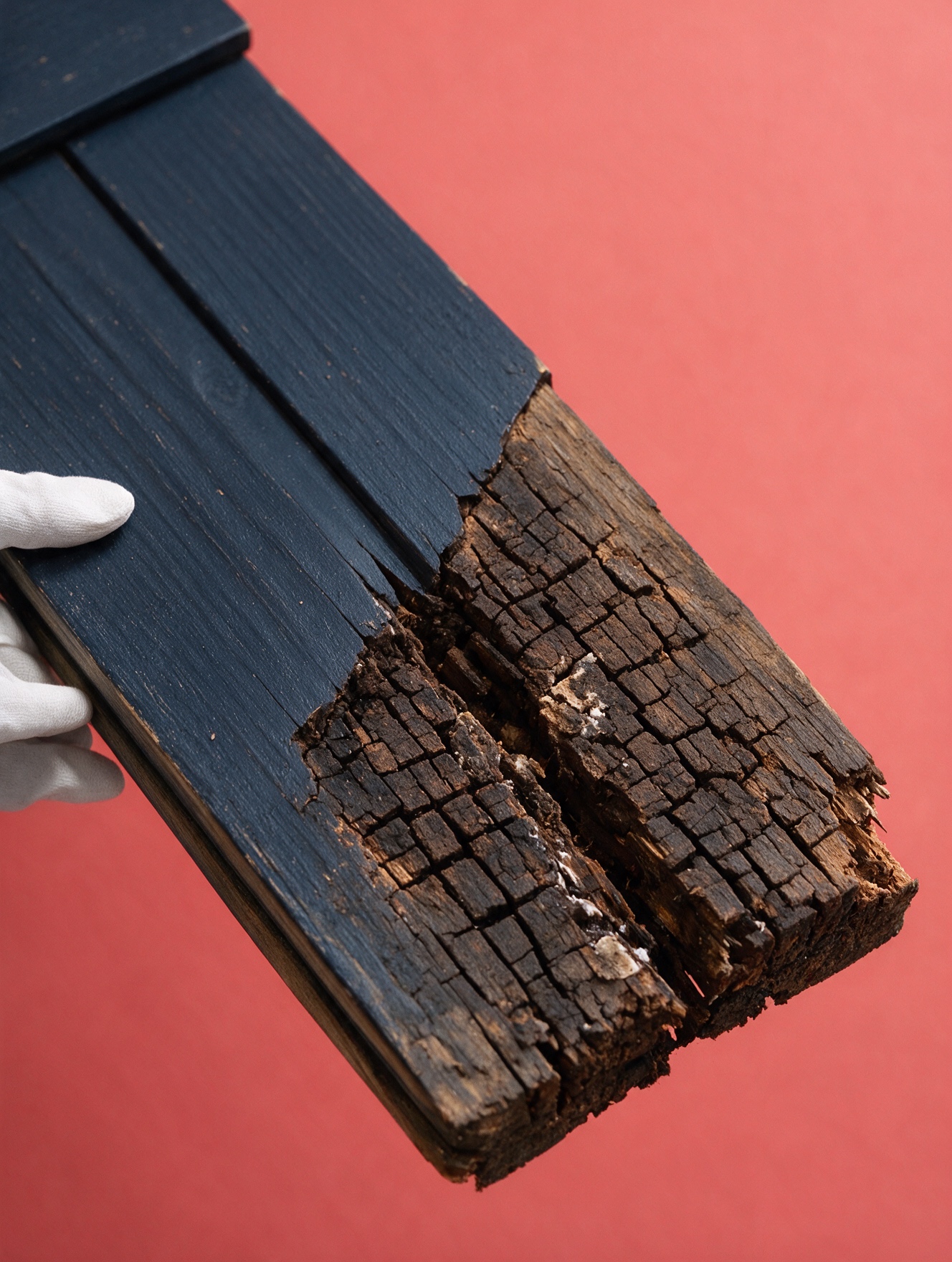
Vertical boards with a batten strip covering each seam fail primarily at those seam locations, where a failed seal lets water track behind the batten and sit against both boards it’s meant to protect. Base-level rot near grade follows the same pattern as any siding type. Repair here often involves the batten and the adjacent board edges together, since they’re functionally a single water-management unit at each seam.
Engineered Wood Siding
Engineered wood siding is a different material category entirely from solid-wood siding, and it fails differently. Its main vulnerability is at cut or exposed edges, factory edges are typically sealed during manufacturing, but field cuts made during installation expose the engineered material’s core, which can swell and deteriorate if that cut edge wasn’t properly sealed on-site. This is a distinct failure mode from the wicking pattern that affects solid pine trim, worth understanding on its own terms rather than assuming solid-wood repair logic applies directly.
The Common Thread: Ground-Level Zone
Regardless of siding type, the bottom courses closest to grade see consistently higher moisture exposure from splash-back and, often, landscaping contact, covered in detail in our full inspection checklist. This zone deserves its own inspection pass on any siding type, not just a general glance at the wall.
Repair or Replace, By Type
Individually-unit-based siding types, lap boards, shingles, board-and-batten panels, generally favor board-by-board or shingle-by-shingle repair rather than full-wall replacement, since the damage is naturally contained to discrete, independently replaceable units. This changes if the sheathing behind the siding is also compromised, or if the damage spans a significant portion of a wall rather than isolated sections, at which point a broader assessment is warranted regardless of siding type.
Not sure how much of your siding actually needs attention?
For the full breakdown by siding material, see our dedicated Wood Siding Rot Repair page.
Sources: Canadian Wood Council, durability and decay research; Canada Mortgage and Housing Corporation (CMHC), Guidelines for On-Site Measurement of Moisture in Wood Building Materials.