Treated Lumber vs. Untreated Wood for Rot Prevention
By STOP THE ROT CO.
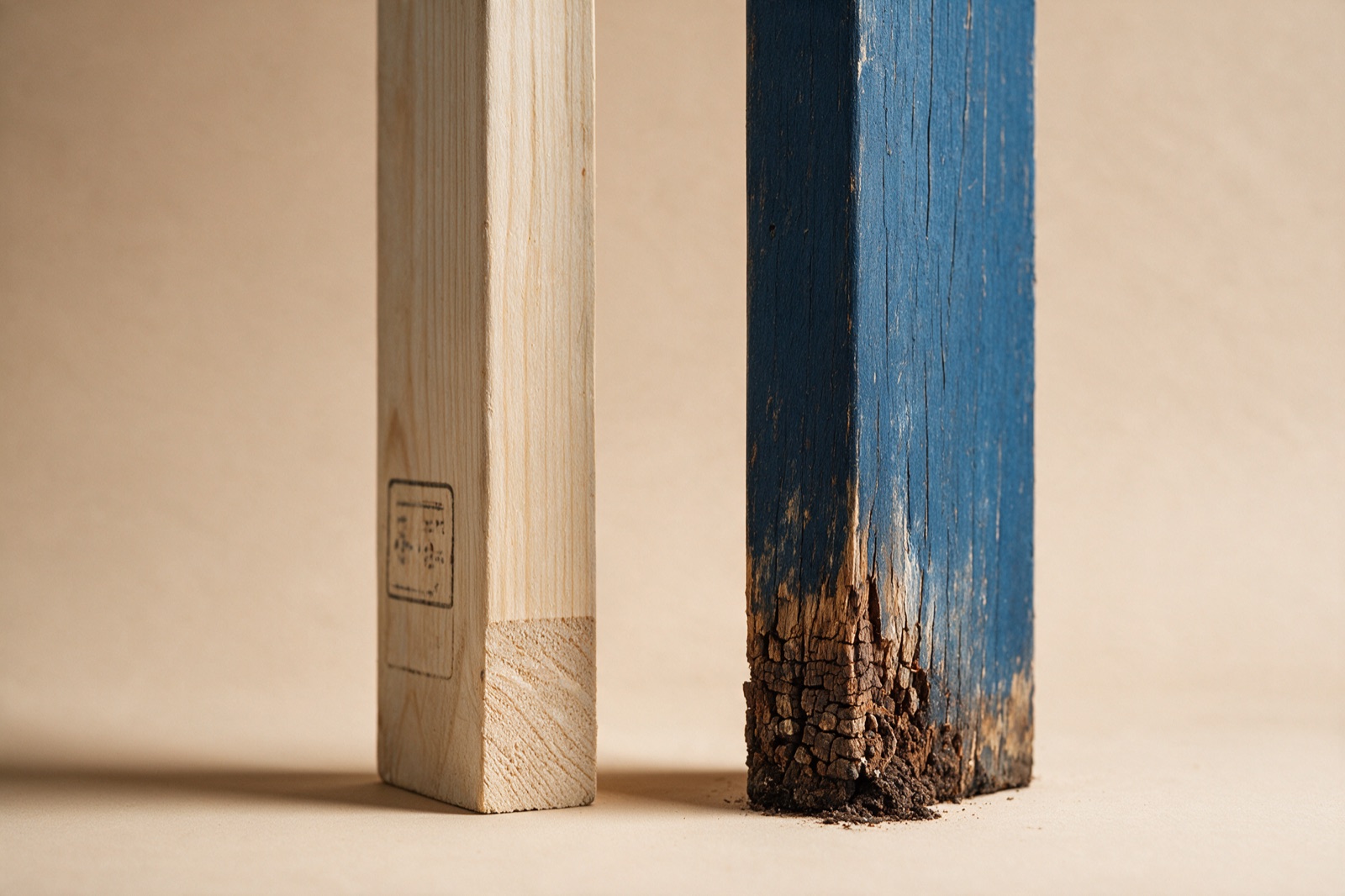
Whether treated lumber vs untreated wood for rot prevention is the right call depends less on a simple treated-or-not question than on whether the specific product is rated for where it’s actually going. Canada has a real, detailed standard governing this, and using the wrong rating in the wrong application is a more common mistake than using no treatment at all.
What Pressure Treatment Actually Does
Pressure treatment forces a preservative deep into the wood fibre under pressure, rather than just coating the surface, protecting the wood against fungal decay and insect damage from the inside. In Canada, only wood preservatives registered by Health Canada’s Pest Management Regulatory Agency are permitted for use, and the manufacture and application of treated wood are governed by the CSA O80 Series of standards, referenced directly in the National Building Code of Canada and provincial building codes.
The Canadian Standard: CSA O80 and Use Categories
Canadian standards for wood preservation are based on American Wood Protection Association standards, modified specifically for Canadian conditions. Under CSA O80.1, treated wood is rated into Use Categories describing the exposure it’s actually built to handle:
UC1 and UC2: dry interior construction, with UC2 covering interior wood not in ground contact but exposed to occasional dampness
UC3: exterior construction not in ground contact, such as deck framing above grade
UC4: direct ground or freshwater contact, the category that applies to deck posts, fence posts, and other structural members actually touching or buried in soil
UC5: severe exposure, including saltwater contact
This matters more than it might seem. A UC3-rated board is genuinely fine for above-ground deck framing, but it’s undertreated for an application that puts it in direct ground contact, where a UC4-rated product is what the application actually calls for. Using the wrong category, not just “untreated” wood, is a real and common cause of premature failure in ground-contact applications like deck posts.
Where Untreated Wood Is Still the Right Choice
Treatment isn’t universally beneficial, it’s specific to the moisture exposure a piece of wood will actually face. Dry interior framing, protected from any meaningful moisture exposure, has no real need for pressure treatment, and treated lumber is neither required nor typically used in these applications.
Naturally Resistant Species as an Alternative
Species like cedar carry natural rot resistance without pressure treatment, a reasonable choice for siding, trim, and some above-ground applications, provided sealing and maintenance are kept up. Cedar isn’t a substitute for properly rated treated lumber in true ground-contact structural applications, but it’s a legitimate option where the exposure is more moderate. For a fuller comparison of exterior trim materials, see our guide on pine vs. PVC trim.
What This Means for a Deck or Structural Repair
Deck posts, ledger boards, and any wood in ground or persistent moisture contact should be UC4-rated, not simply “pressure treated” in a generic sense. Above-ground framing calls for UC3. Getting the category right, not just the presence of treatment, is what determines whether the material actually performs as expected over the life of the structure.
Not sure whether existing structural wood on your property was rated correctly for its application?
Material choice is one part of rot prevention, see Wood Rot Repair for the rest of what a properly done repair requires.
Sources: Canadian Wood Council, CSA O80 Wood Preservation; National Building Code of Canada; Health Canada Pest Management Regulatory Agency.