Wood Rot Under a Bathroom or Kitchen Floor: Causes and Signs
By STOP THE ROT CO.
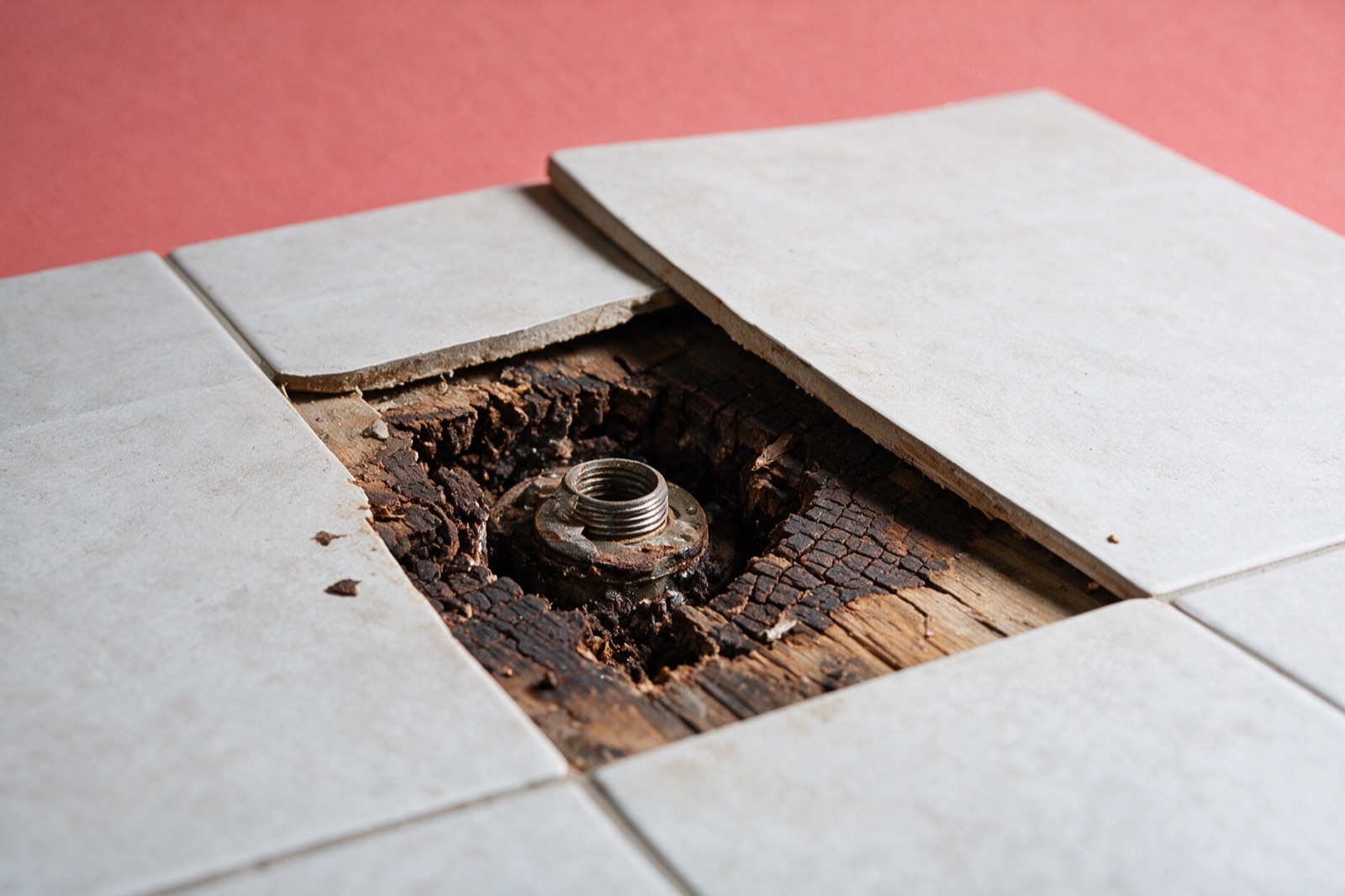
A soft spot near a toilet or a floor that flexes underfoot in a kitchen is rarely just an old floor. Wood rot under a bathroom or kitchen floor is almost always tied to a plumbing source, and it tends to go undetected longer than exterior rot, since the flooring covering it doesn’t show the same visual warning signs that paint failure gives outside.
Why Bathrooms and Kitchens Specifically
These are the two rooms in a home with the highest concentration of plumbing connections, supply lines, drain lines, fixture seals, packed into a small area, over a subfloor that’s often covered in vinyl or tile rather than exposed wood. That covering is part of the problem: a slow leak under sheet vinyl or tile can saturate a subfloor for a long time before any staining or discoloration becomes visible on the surface above it.
The Most Common Sources
A failed toilet flange or wax ring, the seal at the base of a toilet where it connects to the drain. This is one of the more common sources of slow, chronic subfloor moisture, since a compromised seal can leak with every flush for months before it’s obvious, well below the visible floor surface.
The joint where a tub or shower meets the floor. Failed caulk or grout at this joint lets water seep behind or beneath it with every use, a slow, repeated exposure rather than a single event.
Supply line and drain connections under sinks and dishwashers. A slow drip at a fitting, often hidden inside a cabinet, can go unnoticed for a long time, especially in a kitchen where the area under a sink isn’t inspected regularly.
Signs to Check For
~ A floor that feels soft, spongy, or flexes noticeably near a toilet, tub, shower, or sink
~ A toilet that rocks or feels unstable, sometimes a sign the subfloor beneath it has deteriorated, not just a loose bolt
~ Cracking or loosening tile or grout near a fixture, which can indicate subfloor movement underneath
~ A persistent musty smell in the bathroom or kitchen without an obvious cause
~ Discoloration at floor-to-wall joints, particularly near a tub or shower enclosure
Why This Often Goes Undetected Longer Than Exterior Rot
Exterior rot generally announces itself through paint failure, discoloration, or a visibly deteriorating surface, all visible warning signs before the damage becomes severe. A subfloor under vinyl or tile has no equivalent early warning, the covering material hides the wood’s condition entirely until either the flooring itself starts to show damage or the softness becomes noticeable underfoot, which is often a later-stage sign than exterior rot typically reaches before being caught.
What This Means for Repair
Assessing this properly generally involves removing the affected flooring to access and evaluate the subfloor directly, since a moisture-meter reading through an intact floor covering doesn’t give the same reliable picture a direct reading does. It’s also worth being clear about scope: our focus is the wood itself, identifying the extent of the damage and repairing or replacing the affected subfloor, while the plumbing source, the actual leak, flange, or seal, typically needs a licensed plumber to correct. Fixing the wood without addressing the plumbing source behind it tends to mean the same problem returns. For the broader picture on interior moisture sources, see our guide on water leak rot damage repair.
Noticed a soft spot or an unstable fixture?
Rot under a wet-area floor is almost always plumbing-sourced, see Water Leak Rot Damage Repair for how we trace it to the actual leak.
Sources: Canada Mortgage and Housing Corporation (CMHC), Guidelines for On-Site Measurement of Moisture in Wood Building Materials; Canadian Wood Council, durability and decay research.