DIY vs. Professional Wood Rot Repair: How to Actually Decide
By STOP THE ROT CO.
Whether DIY wood rot repair vs hiring a professional is the right call for your situation depends on three things: how far the damage extends, where it is, and what happens if the repair doesn’t hold. None of those depend on how confident you feel with a screwdriver, they depend on the wood itself.
The Honest Answer: It Depends on Three Things
How far the damage extends. A small, contained soft spot is a different job than decay that’s spread through a full cross-section of a board.
Where it is. Trim and surface elements carry no structural load. Ledger boards, sill plates, joists, and framing hold up part of your house. The consequence of a repair failing isn’t the same in both cases.
What happens if it fails. A failed DIY repair on a windowsill means redoing a windowsill. A failed or masked repair on a structural member can hide a real problem behind a surface that looks fine, which is worse than doing nothing at all.
When DIY Is Reasonable
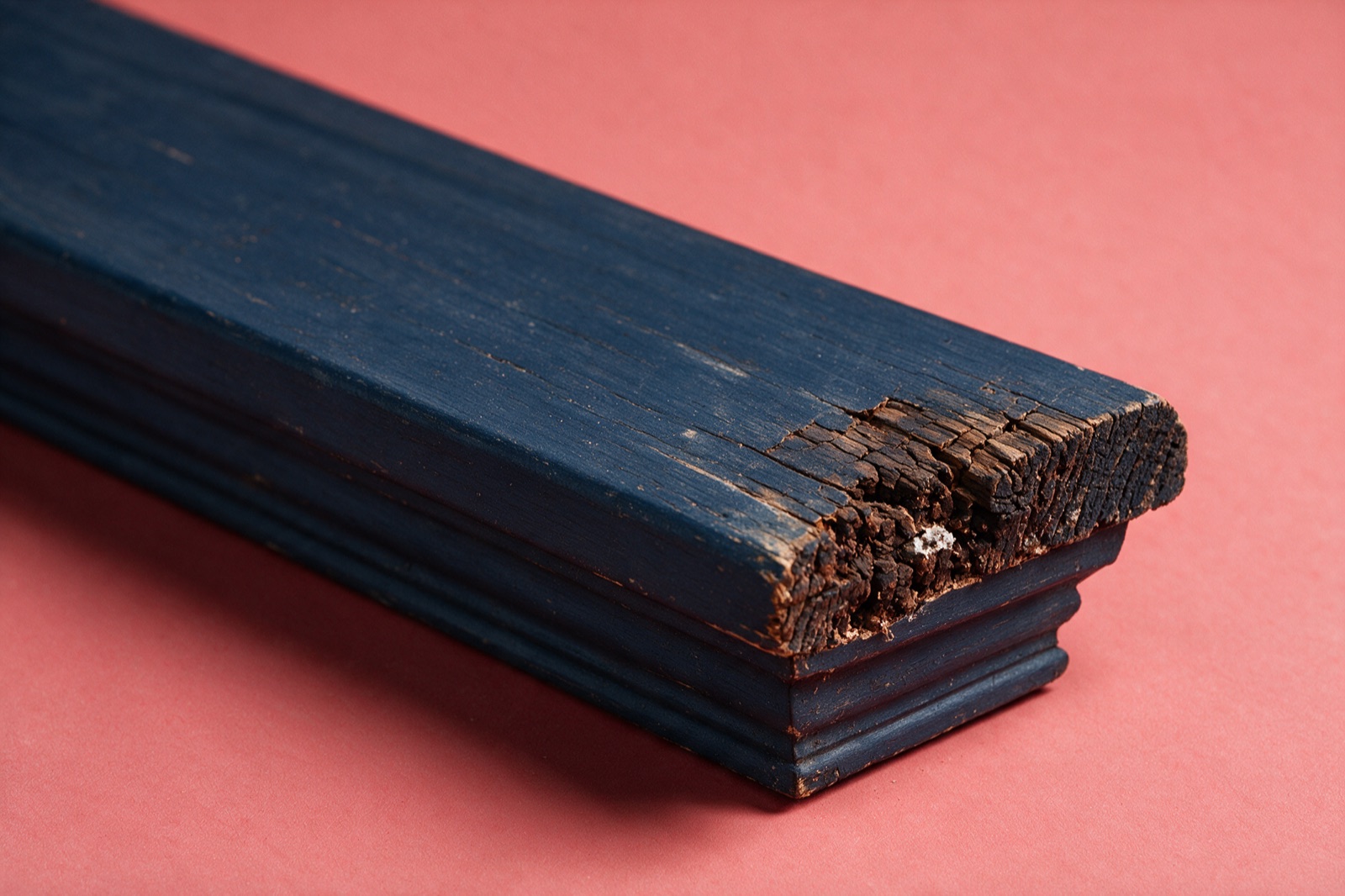
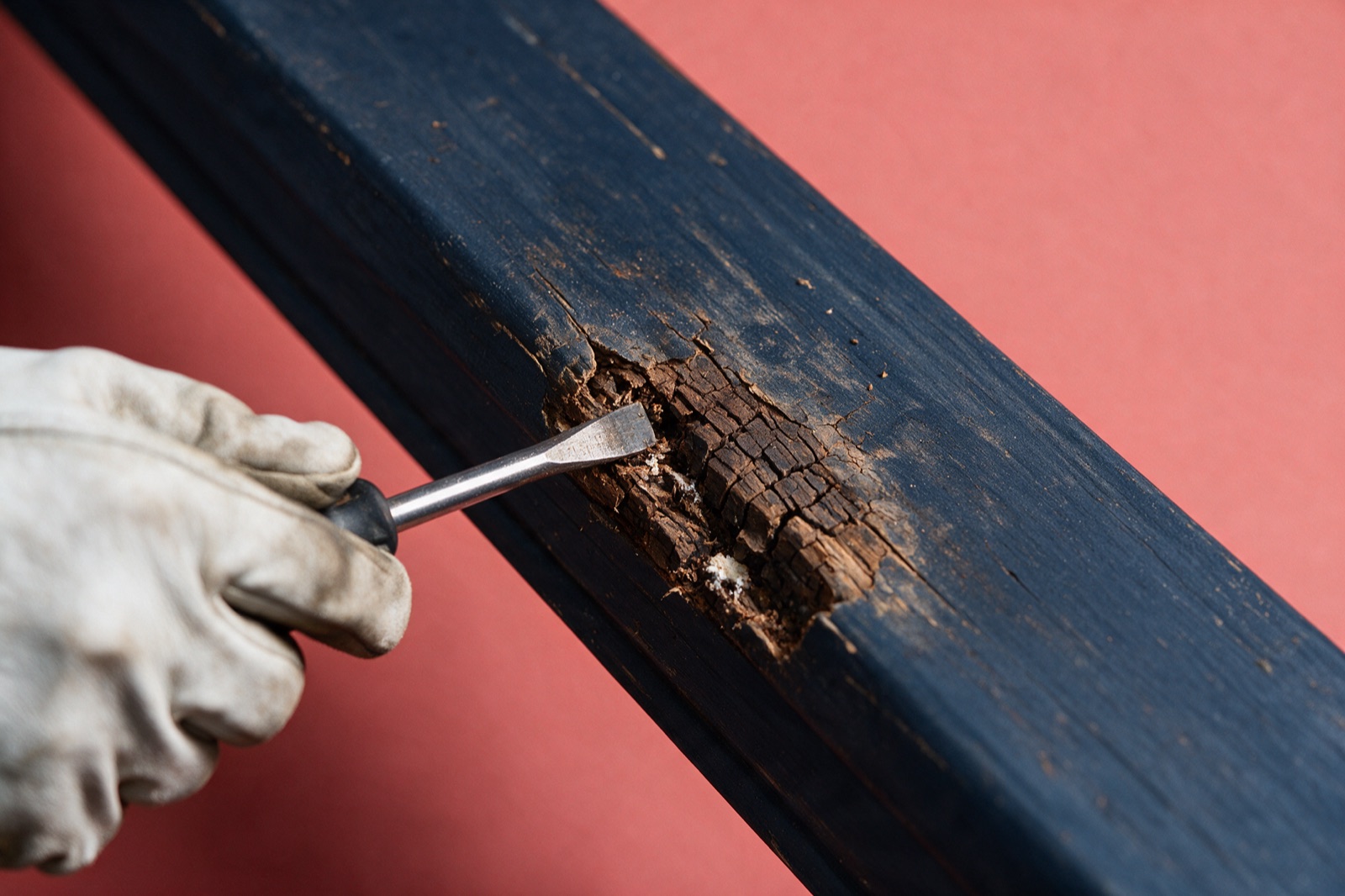
Small, isolated, non-structural rot, a corner of a windowsill, a section of trim, in a spot you can fully see and access, is genuinely within reach for a confident DIYer, provided one condition is met first: the moisture source that caused it has actually been identified and corrected. Repairing the wood without fixing what let the water in tends to mean redoing the same repair later, regardless of who did it.
The One Step Most DIY Attempts Skip
Rotted wood that’s been scraped back to “solid” material is often still porous and structurally weakened at a cellular level, even where it looks sound.
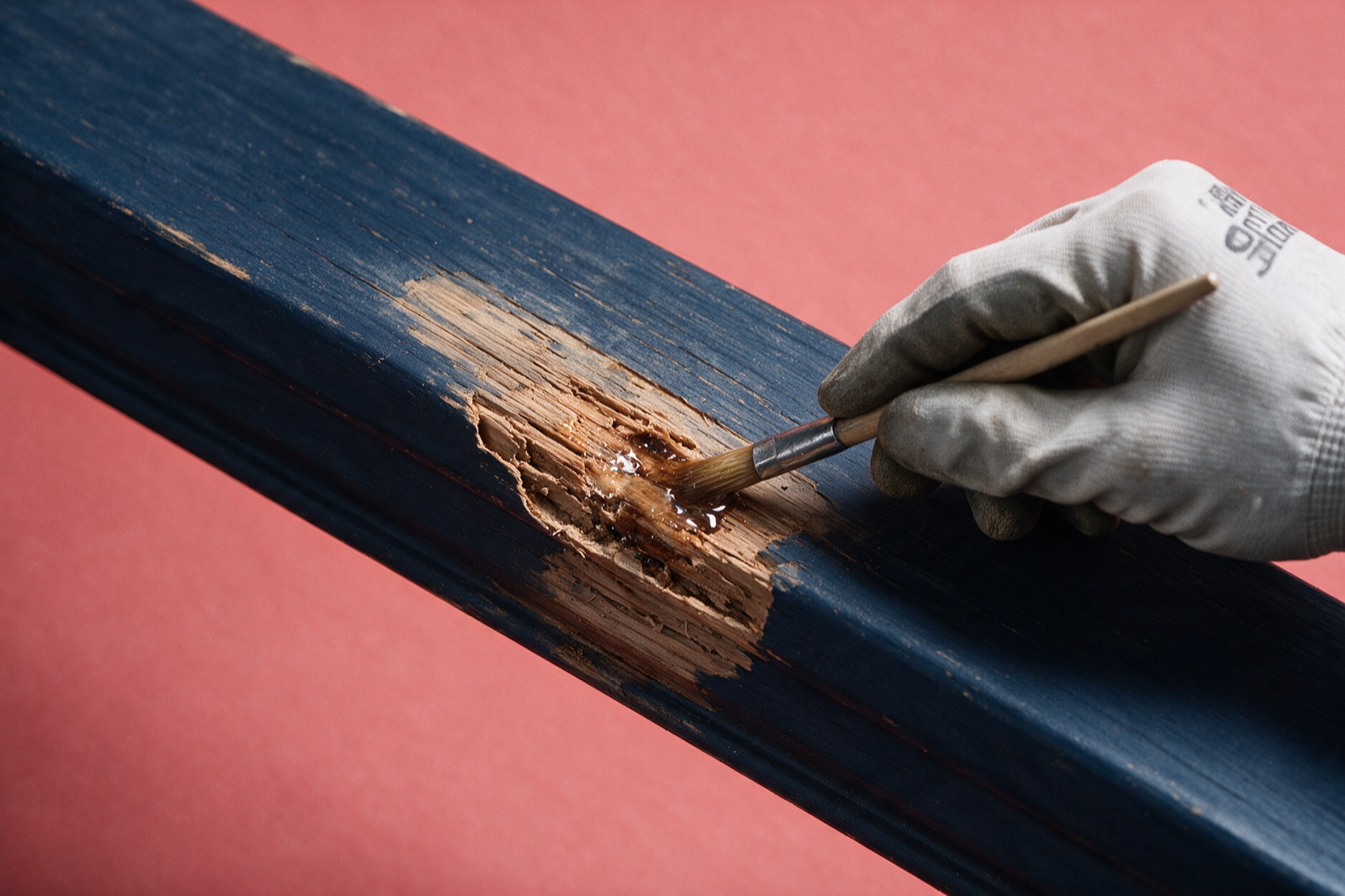
Applying a filler directly to that weakened wood creates a repair that looks complete on the surface but rests on a compromised base. An epoxy consolidant, applied before any filler, penetrates and hardens that porous layer first, giving the filler something solid to actually bond to. Skipping this step is the most common reason a wood-filler repair looks fine for a season and then fails.
When to Stop and Call a Professional
Anything structural. Sill plates, rim joists, deck ledgers, and framing members carry real load. A repair that doesn’t hold here isn’t a cosmetic problem, it’s a safety one.
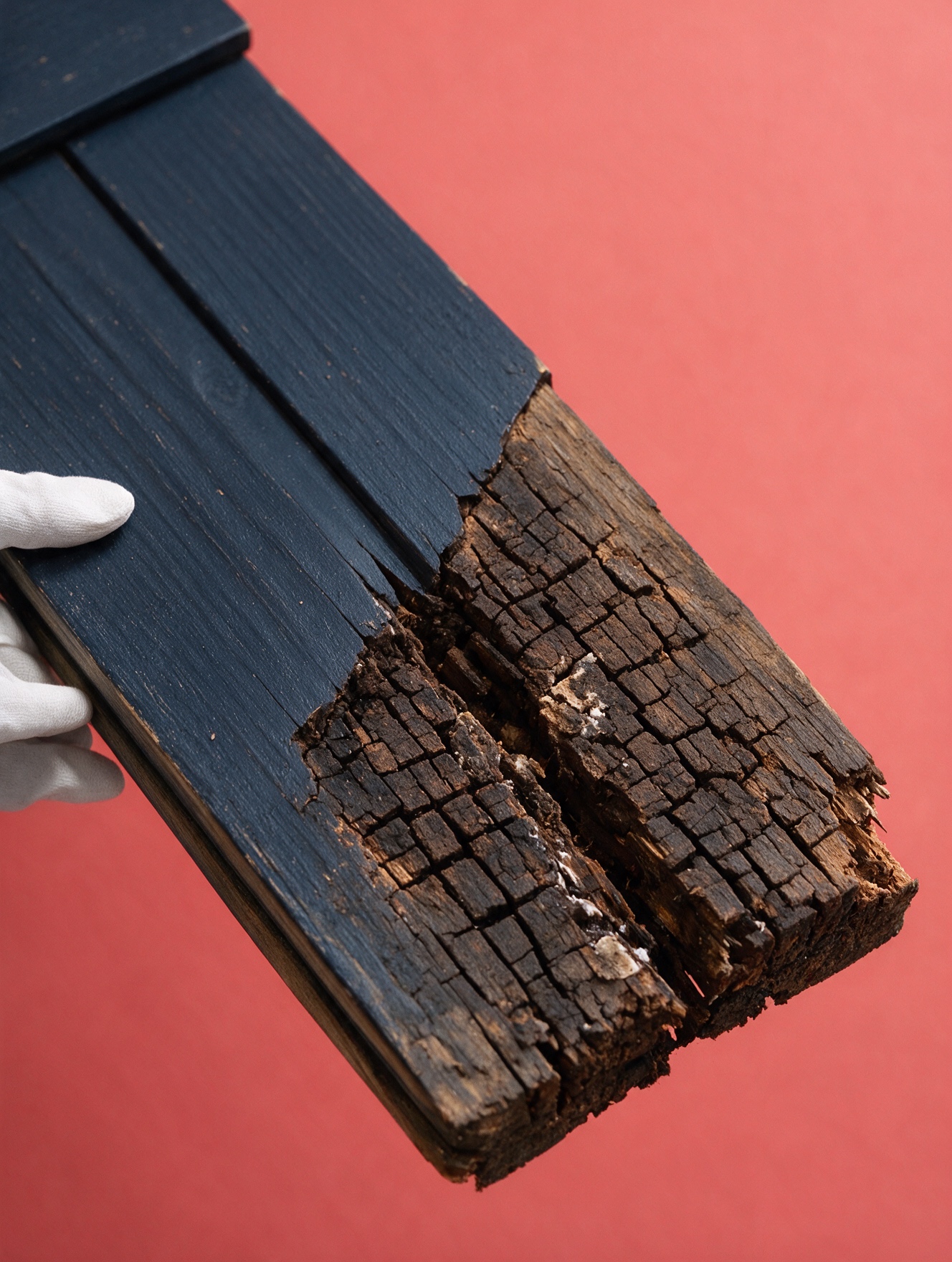
Anything you can’t fully see or access. Rot inside a wall cavity, behind siding, or in a crawl space often extends further than what’s visible from the accessible surface. According to Canadian Wood Council durability research, decay frequently progresses along the grain beyond the point where discoloration is visible, meaning a DIY repair based only on what’s visible can miss the full extent of the problem.
Anywhere a moisture reading matters more than a guess. According to CMHC’s guidelines for on-site wood moisture measurement, wood is generally considered low-risk under roughly 19 to 20 percent moisture content, with active decay likely past roughly 28 to 30 percent. Without a moisture meter, there’s no reliable way to confirm a repair area is actually dry enough to hold, only a visual impression that it looks okay.
The Real Risk of Getting This Wrong
The worst outcome isn’t a DIY repair that needs redoing, it’s one that hides a structural issue behind a finished-looking surface, delaying a proper assessment while the underlying problem continues. If there’s any doubt about whether something is structural, or whether the visible damage represents the full extent of it, that uncertainty is itself the signal to get a professional opinion before proceeding.
How We Approach This Honestly
If what we find during an inspection is genuinely small enough to handle yourself, we’ll tell you that plainly, even though it means less work for us. Our free wood rot inspection Vancouver gives you an actual moisture-meter reading and a written assessment either way, so the decision, DIY or professional, is based on what’s actually there, not a guess in either direction.
Not sure which category your situation falls into?
If the DIY route isn’t the right call for your situation, see Wood Rot Repair for what a professional repair actually involves.
Sources: Canada Mortgage and Housing Corporation (CMHC), Guidelines for On-Site Measurement of Moisture in Wood Building Materials; Canadian Wood Council, durability and decay research.