
Wood Rot Repair in Kitsilano
Vancouver's dedicated wood rot specialists, serving Kitsilano's character homes and beachside builds.
Book Free 20-Point InspectionKitsilano's Housing Stock
Kitsilano runs a wide range: original character homes from the 1900s through the 1930s sitting beside decades of infill and multiplex conversions near Broadway and West 4th. The older stock still carries original wood window frames, sills, and trim that were never built for the redevelopment pressure or renovation cycles the neighbourhood has seen since. Proximity to Kits Beach and English Bay adds a steady coastal humidity load on top of Vancouver's normal wet season, which is exactly the combination that keeps ground-level siding, window sills, and door thresholds wet longer than they'd stay in a drier, more inland part of the city.
Where We Find It First
On Kitsilano character homes, the recurring spots are window sills and frames on the ocean-facing sides of the house, fascia and soffit along low-slope additions built onto older homes, and siding near grade wherever landscaping or a raised bed sits close to the foundation. On newer infill and townhomes, it's usually deck ledgers and stair stringers, since those get less attention during a build than the visible finishes around them.
Free Inspection for Kitsilano Homeowners
We serve Kitsilano regularly and know its housing stock well enough to know where to check first. Book a free 20-point inspection and we'll give you a real moisture-meter reading, not a guess, before any repair decision gets made.
Questions we hear a lot.
Wood rot is fungal decay, not simple aging. A fungus feeds on the cellulose in wood, and it needs sustained moisture to establish itself and keep growing. It starts wherever water reaches wood repeatedly without drying out, a failed seal, a clogged gutter, a grading issue, anything that keeps a piece of wood consistently damp long enough for decay to take hold.
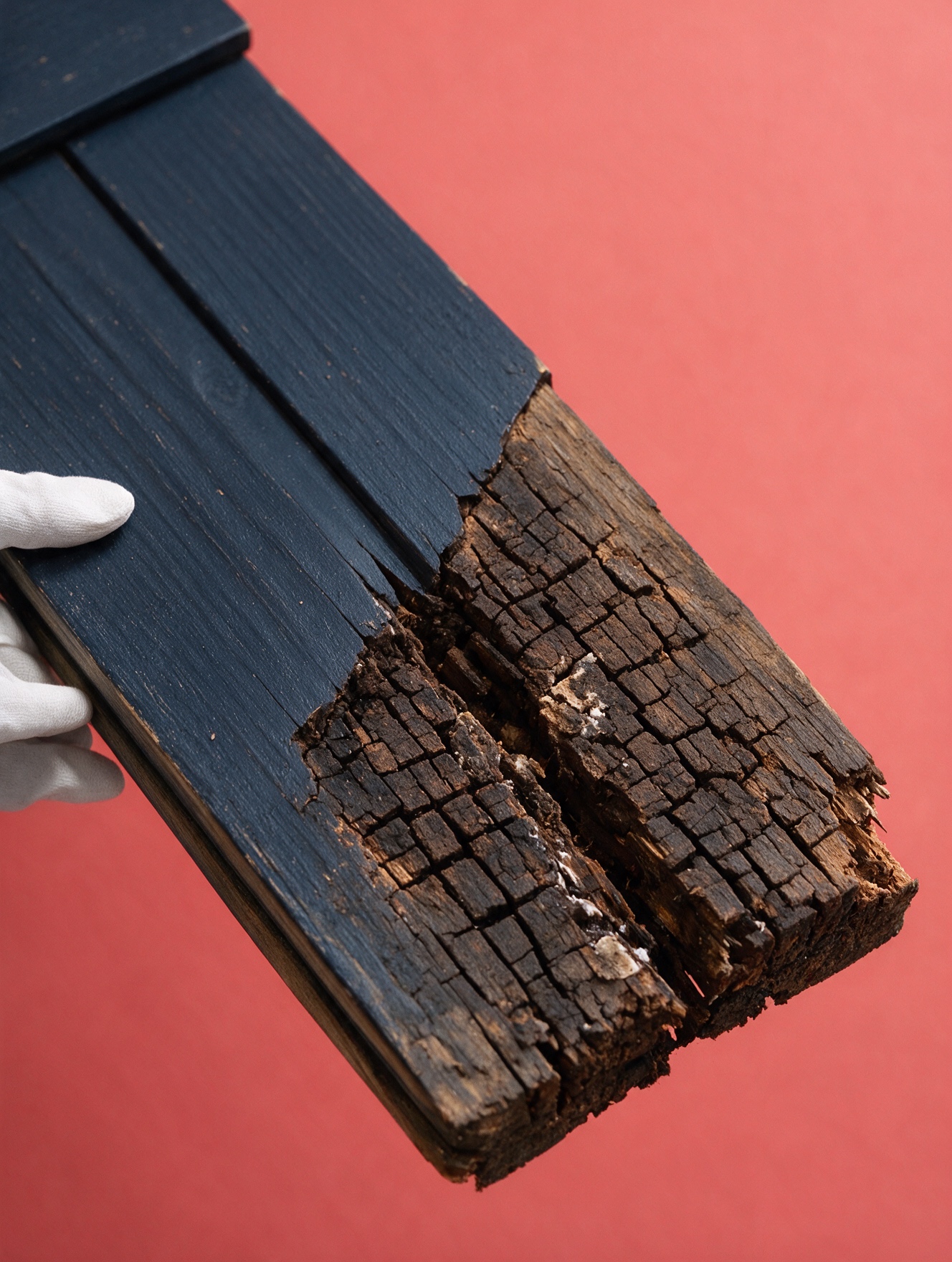
The most reliable check is the Poke Test: press a flathead screwdriver into the wood. Solid wood resists. Decayed wood gives way easily, often sinking a quarter inch or more. Look for discoloration, a cube-like cracking pattern, or a musty smell, especially at windowsills, deck boards, and siding near ground level.
Wood rot and mold often show up together but aren't the same thing. Mold grows on the surface and is mainly an air-quality concern. Wood rot consumes the wood itself and compromises its structural integrity.
It depends entirely on the extent, which isn't something you can judge by eye. A documented moisture-meter reading tells you whether the affected wood is repairable with an epoxy consolidant or needs replacing. Early findings are almost always repairable. The only way to know for certain is an actual reading, not a guess.
Vancouver's roughly six-month wet season, mild temperatures that don't freeze decay dormant the way colder climates do, and, in many neighbourhoods, mature tree canopy that keeps siding and trim shaded and slow to dry, combine to make this a persistent issue here in a way it isn't everywhere in Canada.
It depends on how far the decay has progressed, and that's decided by a moisture-meter reading, not a visual guess. If sound wood remains, epoxy consolidation restores structural integrity. If decay has compromised the wood beyond that point, replacement is the honest answer. We tell you which one applies to your specific finding, in writing.
No. Painting over active rot traps moisture in rather than letting it escape, and it hides the wood's condition from view, making it harder to track whether the problem is getting worse. It's a common, well-intentioned mistake, not a fix.
Moisture control is the only thing that actually halts fungal activity. While arranging a proper repair, address any active leak source immediately, improve airflow to the area, and keep it as dry as possible. This buys time, it doesn't replace finding and fixing the actual cause.
Windowsills, brickmold, deck boards and ledgers, siding near ground level, fascia and soffits, and door thresholds, anywhere wood sits in repeated contact with water without a clear way to dry out.
Rot doesn't stay small. It's an active, living fungus that keeps consuming wood as long as moisture is present, and it can even go dormant when dry and reactivate once it's wet again. A small, contained finding today is the cheapest and simplest stage to address it.
A full 20-point check covering the most common failure points on a property, an actual moisture-meter reading at each relevant location, and a written report with our findings and a quote within 48 hours if work is recommended. No charge, no obligation.
It depends entirely on the extent of decay and whether the fix is a repair or a replacement, which is exactly why we don't quote a number without seeing the wood and taking a real reading first. The free inspection gives you an actual, written price for your specific situation, not a rough estimate.
It ranges from a same-day fix for a contained repair to about a week for a larger job like a full deck replacement, depending on scope. Your written quote includes a realistic timeline for your specific job.
Yes, every job comes with a written 24-month guarantee. If it's not fixed right, we fix it free. If we still can't fix it, you get a full refund.
We serve Vancouver and the surrounding Metro Vancouver area. If your community isn't specifically listed on our service area page, call us, we likely still travel there.
Wherever you are in Metro Vancouver, we're worth a call.
JUST LOOKING, OR READY TO BOOK? EITHER WAY, START HERE.
Tell us a bit about it and we'll call you back within the hour, day or night.