Pine vs. PVC Trim: Which Actually Resists Rot
By STOP THE ROT CO.
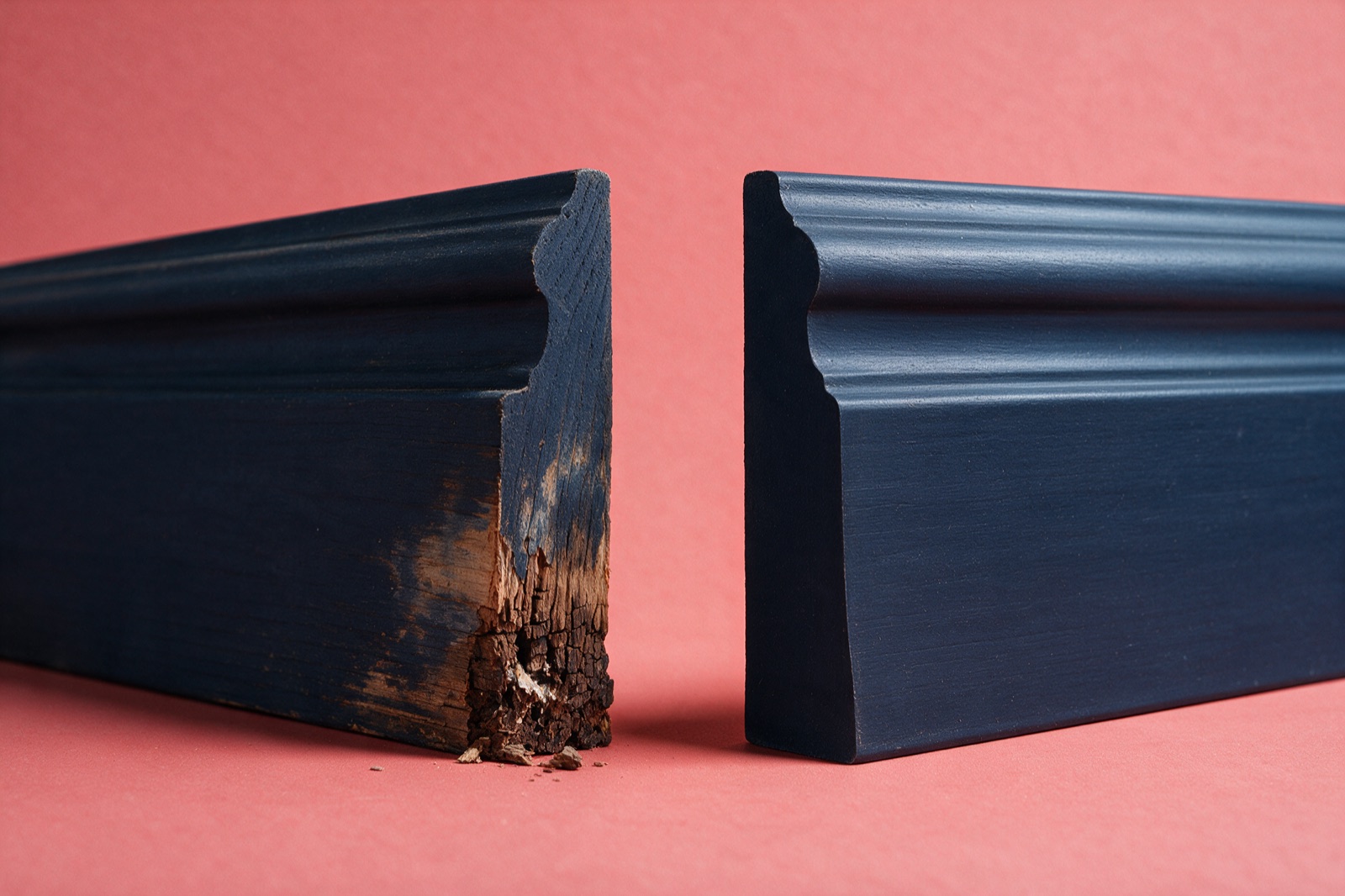
When trim rots and needs replacing, the material question matters as much as the repair itself. Pine vs PVC trim isn’t just a cost decision, it’s a decision about whether the same failure comes back in a few years.
Why Pine Fails Where It’s Used
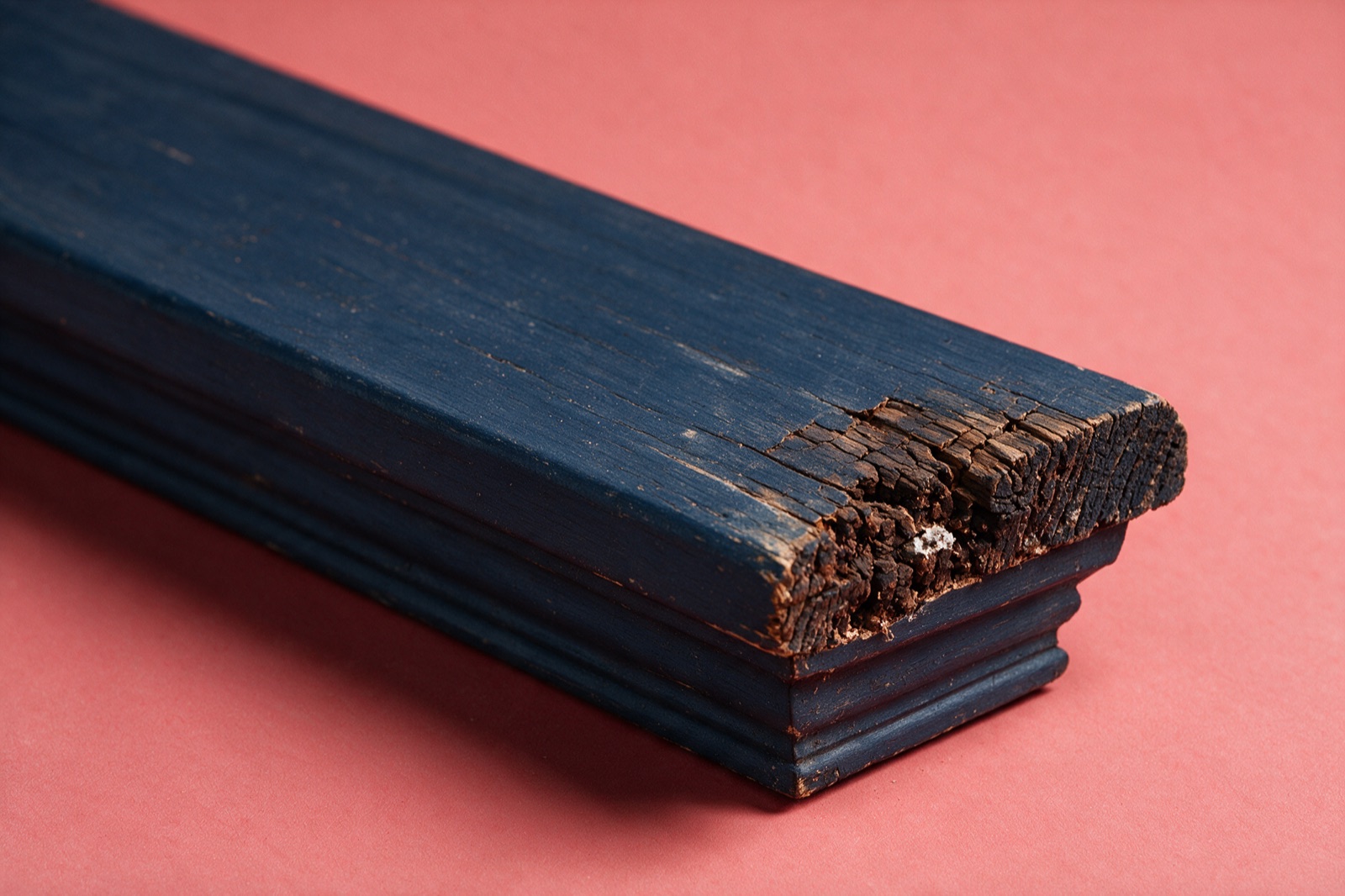
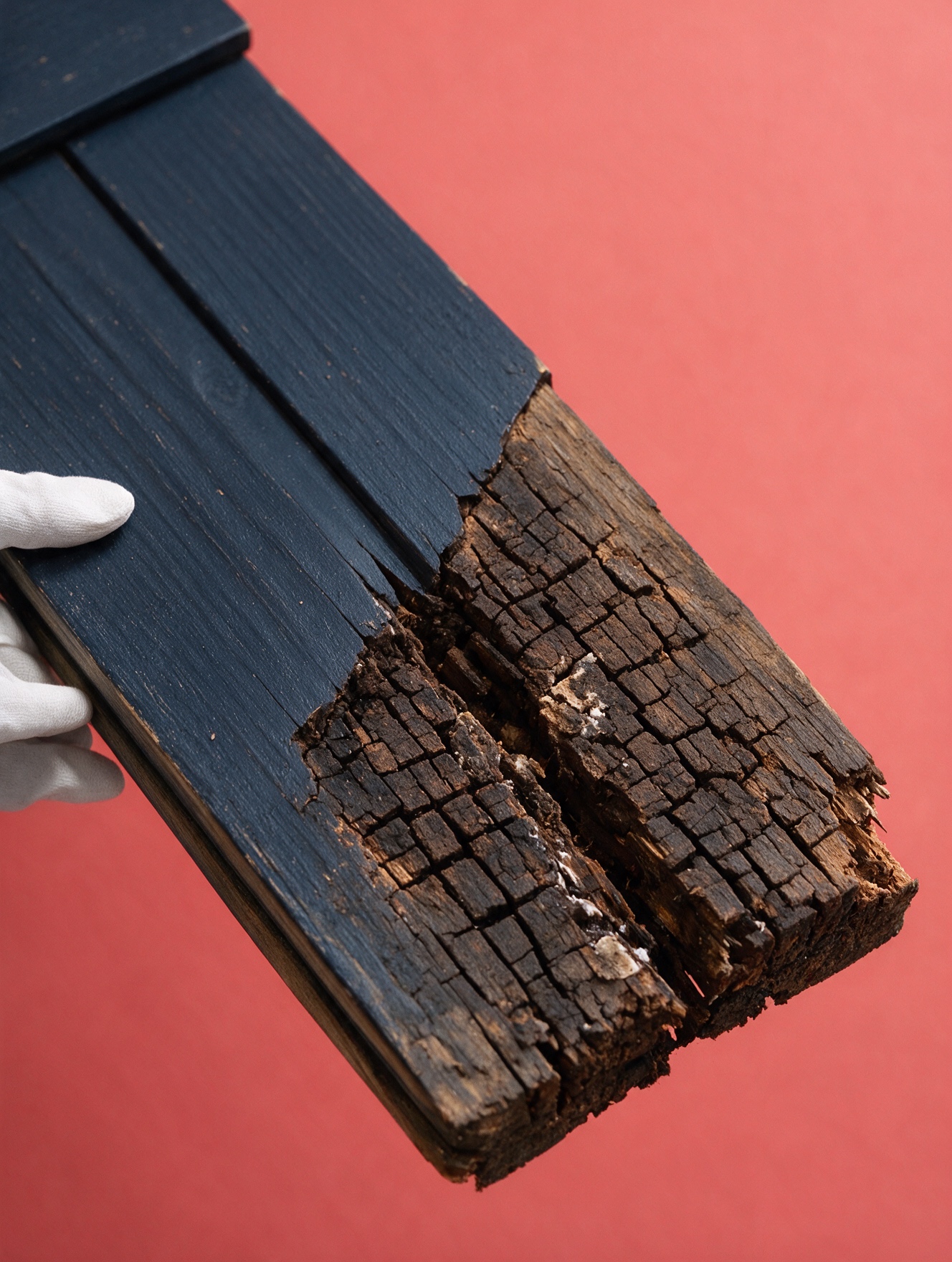
Untreated pine is common in exterior trim, brickmold, jamb bases, sill nosing, largely because it’s inexpensive and easy to mill into detailed profiles. The problem is mechanical, not just a matter of maintenance. Pine is porous, and where it sits directly against or below a water-collecting surface, such as a windowsill or a threshold, it wicks moisture upward, as a paper towel does with a spill.
According to Canadian Wood Council durability research, this pattern is well documented across wood trim generally, not specific to any one house or installation. Paint and caulk slow the process but don’t stop it permanently, since a wicking piece of trim is drawing moisture from below the paint line, not just from rain hitting the surface.
What PVC Actually Offers
Cellular PVC trim doesn’t absorb moisture at all, so the wicking failure pattern that defines pine’s weakness simply doesn’t apply to it. It won’t rot, swell, or support fungal growth, since there’s no organic material for decay fungi to consume in the first place. It also paints well and machines similarly to wood, which is why it’s become a standard substitute in exactly the high-risk spots where pins repeatedly fail.
The Real Tradeoffs, Honestly
PVC isn’t a universal upgrade, and it’s worth knowing where it falls short before assuming it’s always the better choice. It costs more upfront than pine. It expands and contracts more with temperature than wood does, which needs to be accounted for in installation, particularly on longer runs. And on character homes with detailed original millwork, matching a historic profile exactly in PVC isn’t always as straightforward as milling it in wood. None of these are reasons to avoid PVC where it’s the right call, but they’re real considerations, not just a sales pitch.
Where Each One Actually Makes Sense
High-risk, water-collecting spots, sill nosing, brickmold bases, jamb bottoms, threshold-adjacent trim, are where PVC’s resistance earns its higher upfront cost. These are the exact locations that fail first and most often when built in pine, so the material upgrade directly targets the failure pattern.
Lower-risk, well-maintained installations, vertical trim runs, areas with good overhangs and consistent paint maintenance can reasonably stay in pine, provided the maintenance actually happens. Pine isn’t inherently a bad material, it fails specifically where wicking conditions exist and go unaddressed.
Ground-contact and structural applications, deck posts, framing members, aren’t a pine-versus-PVC question at all. These call for appropriately rated pressure-treated lumber, rated for ground contact under Canadian standards, since PVC isn’t a structural substitute and untreated wood of any species won’t hold up in direct ground contact.
Cedar, as a Middle Option
Naturally rot-resistant species like cedar sit between the two, offering real moisture resistance without PVC’s cost or expansion characteristics, provided sealing and maintenance are kept up. Cedar isn’t immune to decay, according to CMHC’s guidelines for on-site wood moisture measurement, the same 19 to 20 percent moisture threshold applies regardless of species, but its natural resistance buys more margin than pine does before that threshold becomes a problem.
What We Actually Use, and Why
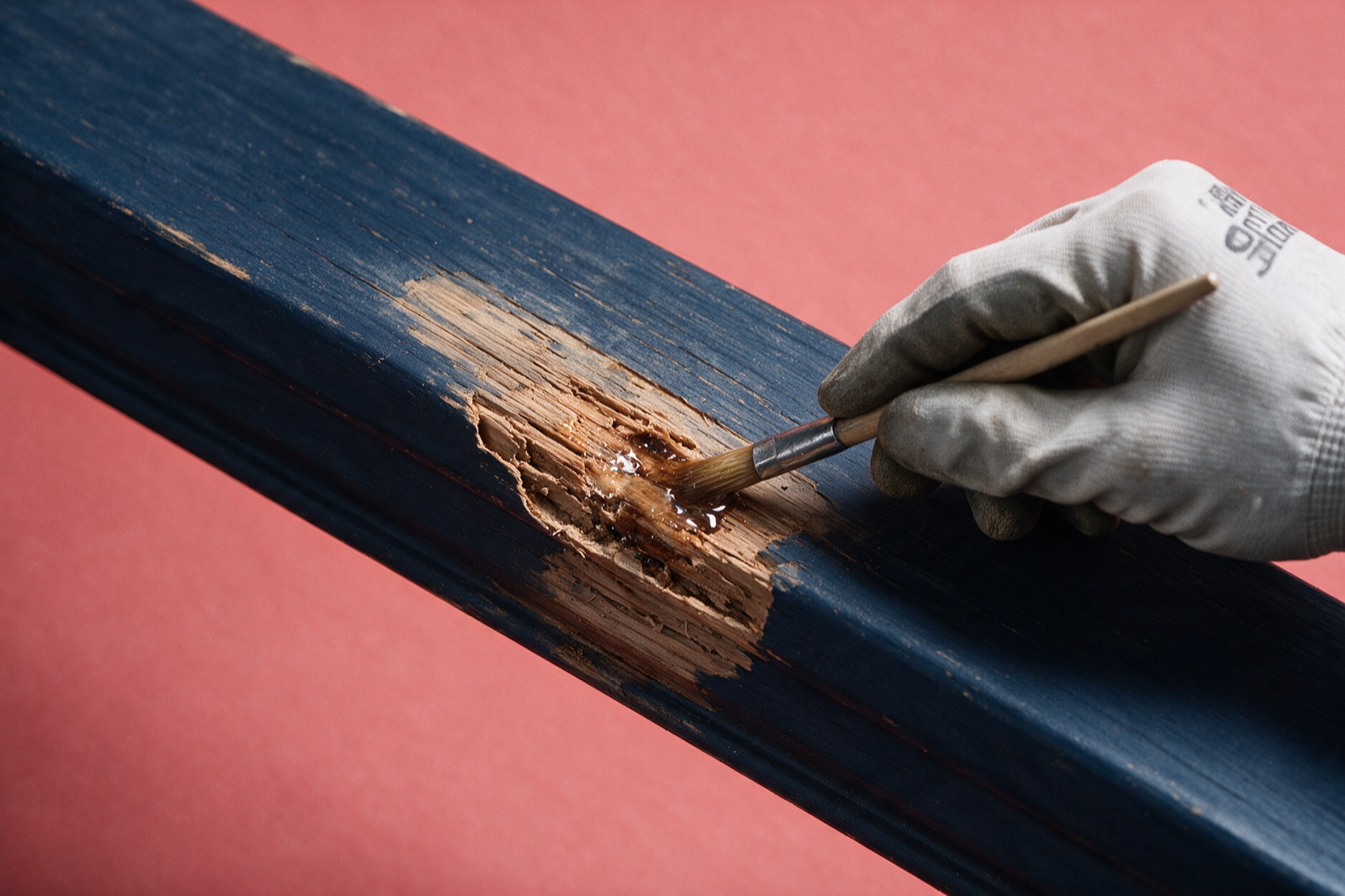
Material choice on every job comes down to where the piece sits and what it’s replacing, not a single default answer. Where a pattern of pine wicking failure is the reason a piece needed replacing in the first place, we typically recommend PVC in that exact spot rather than reinstalling more pine into a location that’s already proven it doesn’t hold up. Full details on our repair materials are covered on our How We Fix It page.
Not sure which material makes sense for your repair?
Trim material choice matters most where it meets the fascia, see Fascia Wood Rot Repair for how we handle that specific failure point.
Sources: Canadian Wood Council, durability and decay research; Canada Mortgage and Housing Corporation (CMHC), Guidelines for On-Site Measurement of Moisture in Wood Building Materials.