Signs of Wood Rot: What to Look For in a Vancouver Home
By STOP THE ROT CO.
2024 was Vancouver’s wettest year this century. According to CBC News, citing an Environment Canada meteorologist, more than 1,367 millimetres of rain fell at Vancouver International Airport that year, the most since 1999, driven by a series of atmospheric river events along the coast. That’s not a one-off statistic. It’s a preview of the conditions exterior wood in this city deals with most years, and it’s exactly why signs of wood rot tend to show up in the same handful of places, over and over, on homes across Vancouver.
This guide walks through what to actually look for, by sense, not just by location, and where to check first.
What’s Actually Happening to the Wood
Wood rot is caused by fungi that digest cellulose and lignin, the compounds that give wood its strength and rigidity. Those fungi need two things to establish themselves: wood, and sustained moisture. According to CMHC’s guidelines for on-site wood moisture measurement, wood is generally considered low-risk under roughly 19 to 20 percent moisture content. Past that, decay risk climbs, and sustained readings above roughly 28 to 30 percent, the fiber saturation point, mean active decay is likely already underway.
Vancouver’s wet season runs roughly October through April, per Environment and Climate Change Canada’s climate normals data. That’s about six months a year where exterior wood regularly sits in the moisture range fungi need to stay active, which is a large part of why this city sees rot as a recurring, predictable pattern rather than an occasional surprise.
The Signs, By How You’ll Actually Notice Them
What You’ll See
Discoloration. Dark streaks or patches, often looking like a water stain that never fully dries, are usually the earliest visible sign. A less common variety, called white rot, does the opposite, bleaching wood to a pale, stringy appearance instead. Either way, an uneven, patchy color change on wood that used to look uniform is worth a closer look.
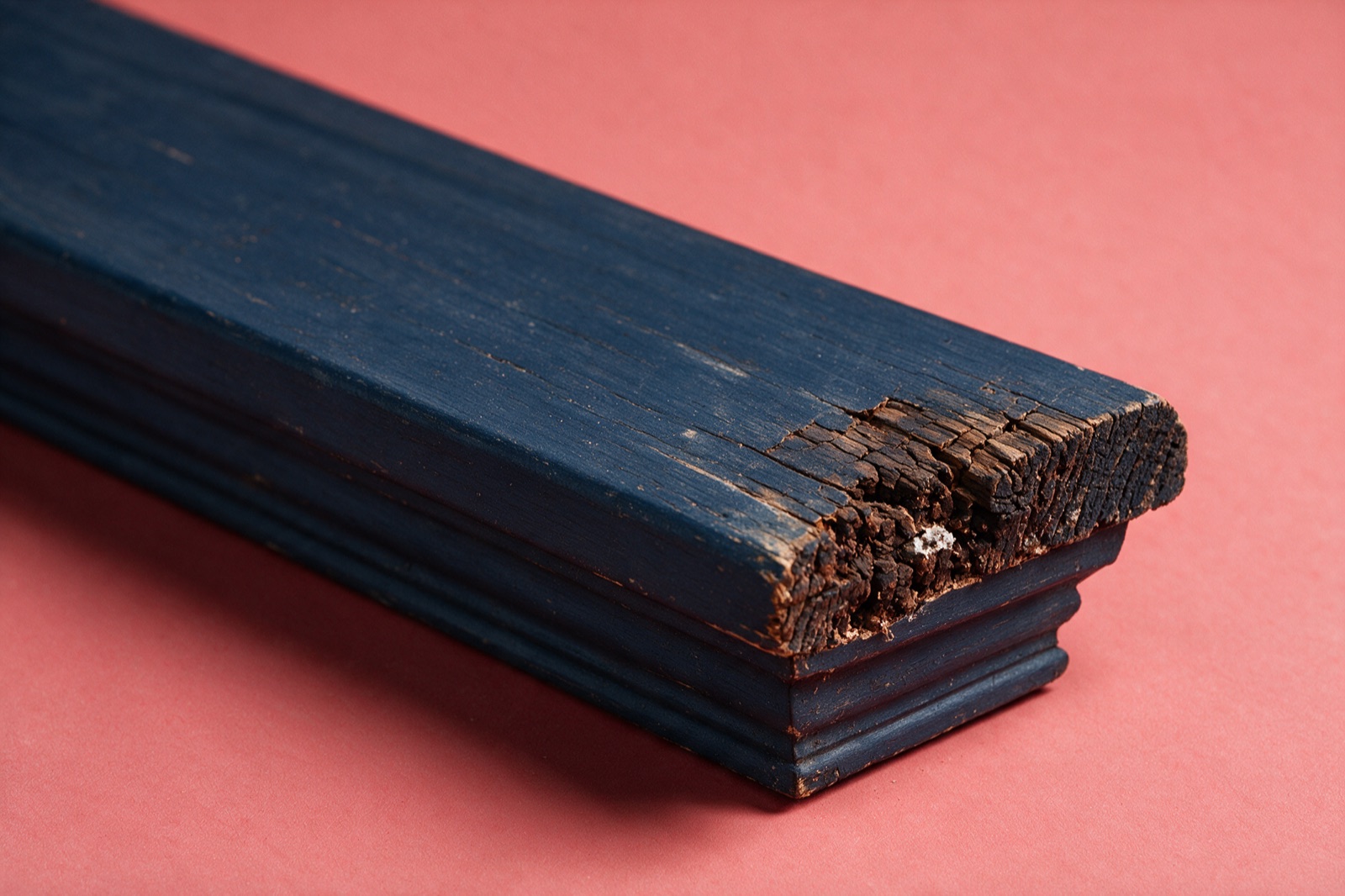
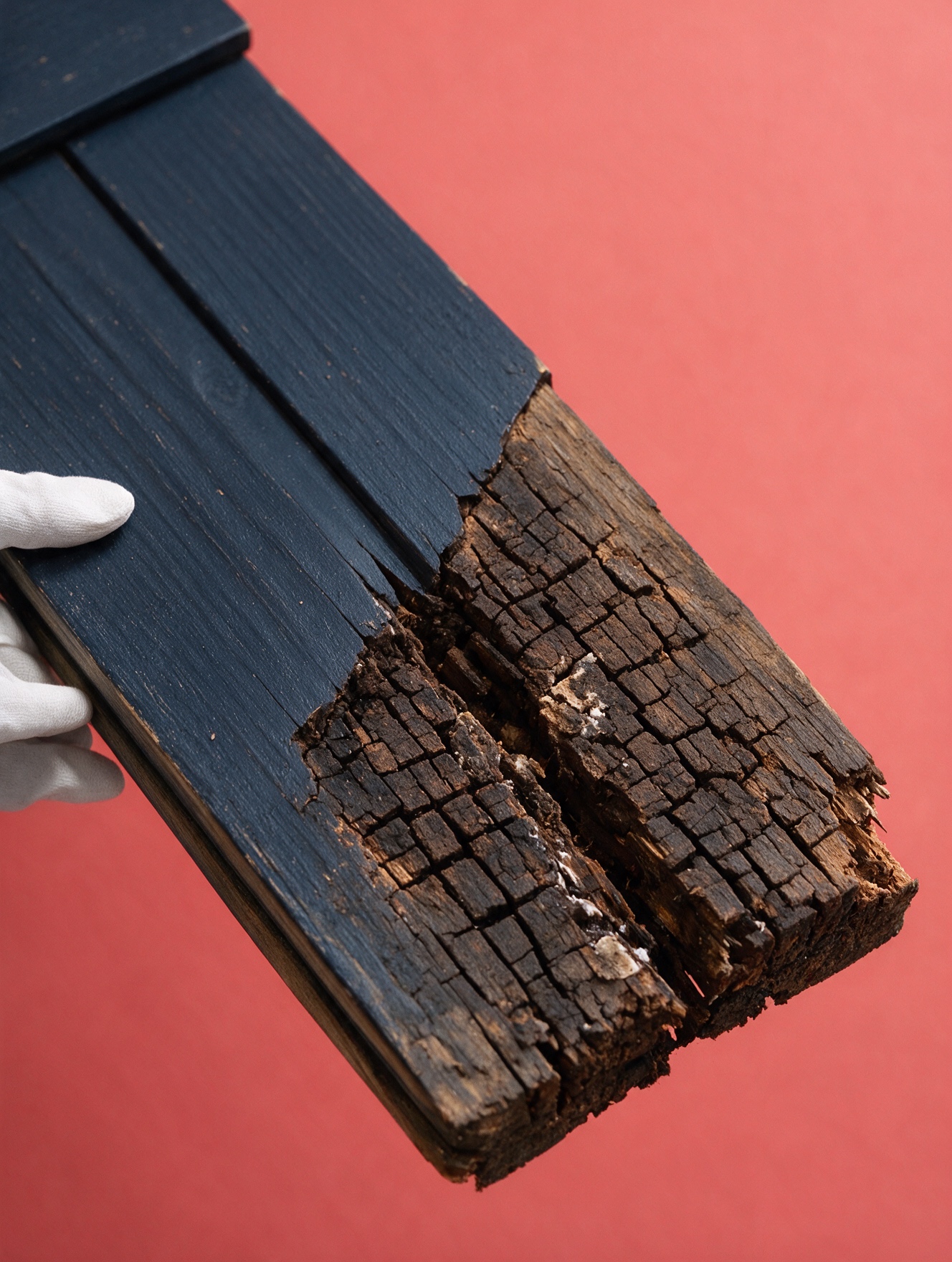
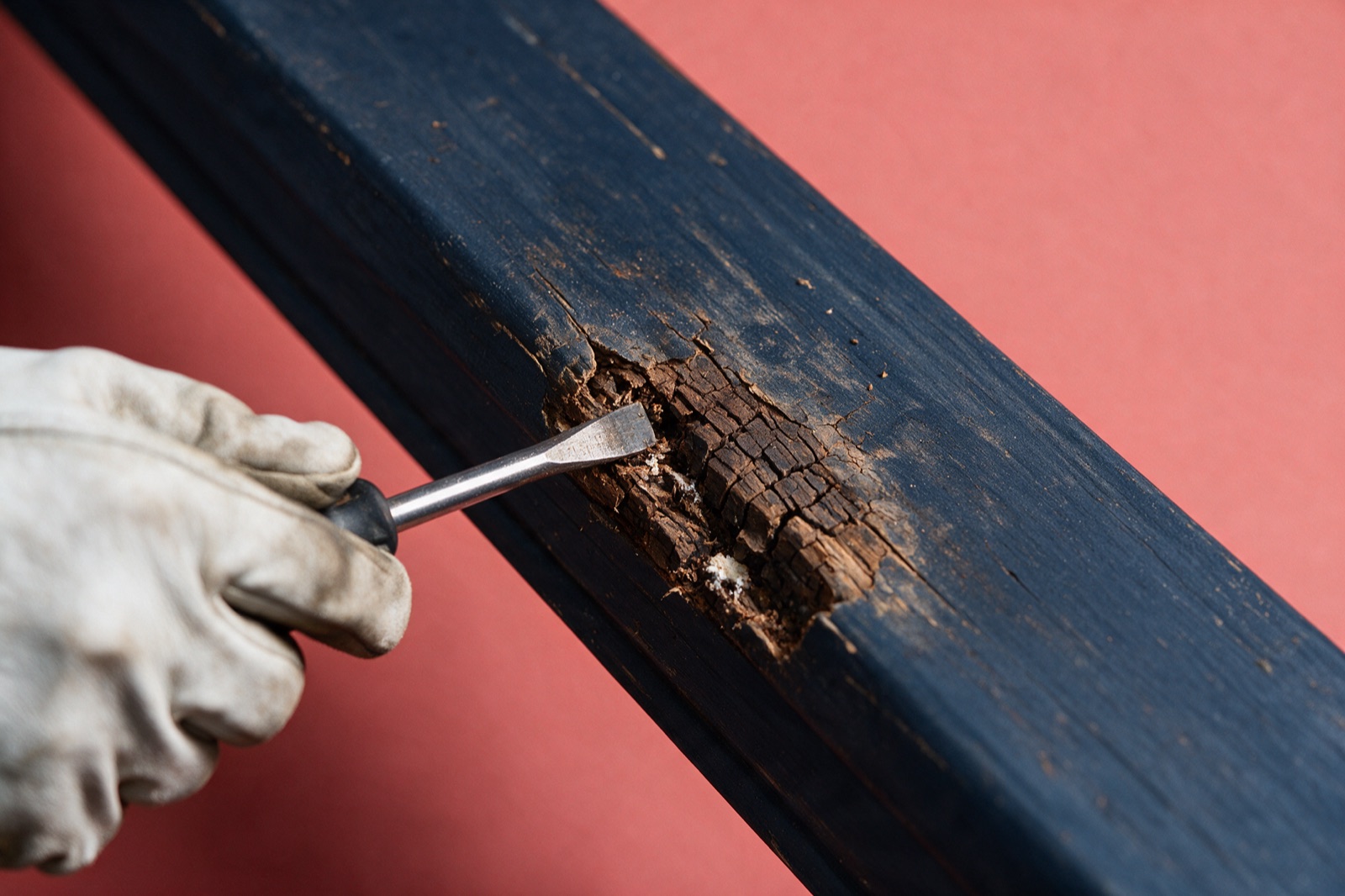
Cracking into small cube-like pieces. The most common decay type in wood-frame homes, called brown rot, shrinks and darkens wood as it breaks down, eventually cracking it into small, blocky squares. Dried, affected wood crumbles to a fine powder under light pressure.
Paint or caulk failure with no obvious cause. Peeling, bubbling, or cracked paint on an exterior wood surface usually means moisture is trapped underneath it, not that the paint itself simply aged out. According to Canadian Wood Council field research on wood durability, sustained moisture behind a paint film is one of the more common ways rot develops undetected, since the surface can look intact right up until it isn’t.
Visible fungal growth. In more advanced cases, fine white, gray, or black thread-like growth (mycelium) may be visible directly on the wood surface, and in severe, long-neglected cases, small mushroom-like structures can appear. Either one means the decay is well established, not early-stage.
What You’ll Feel
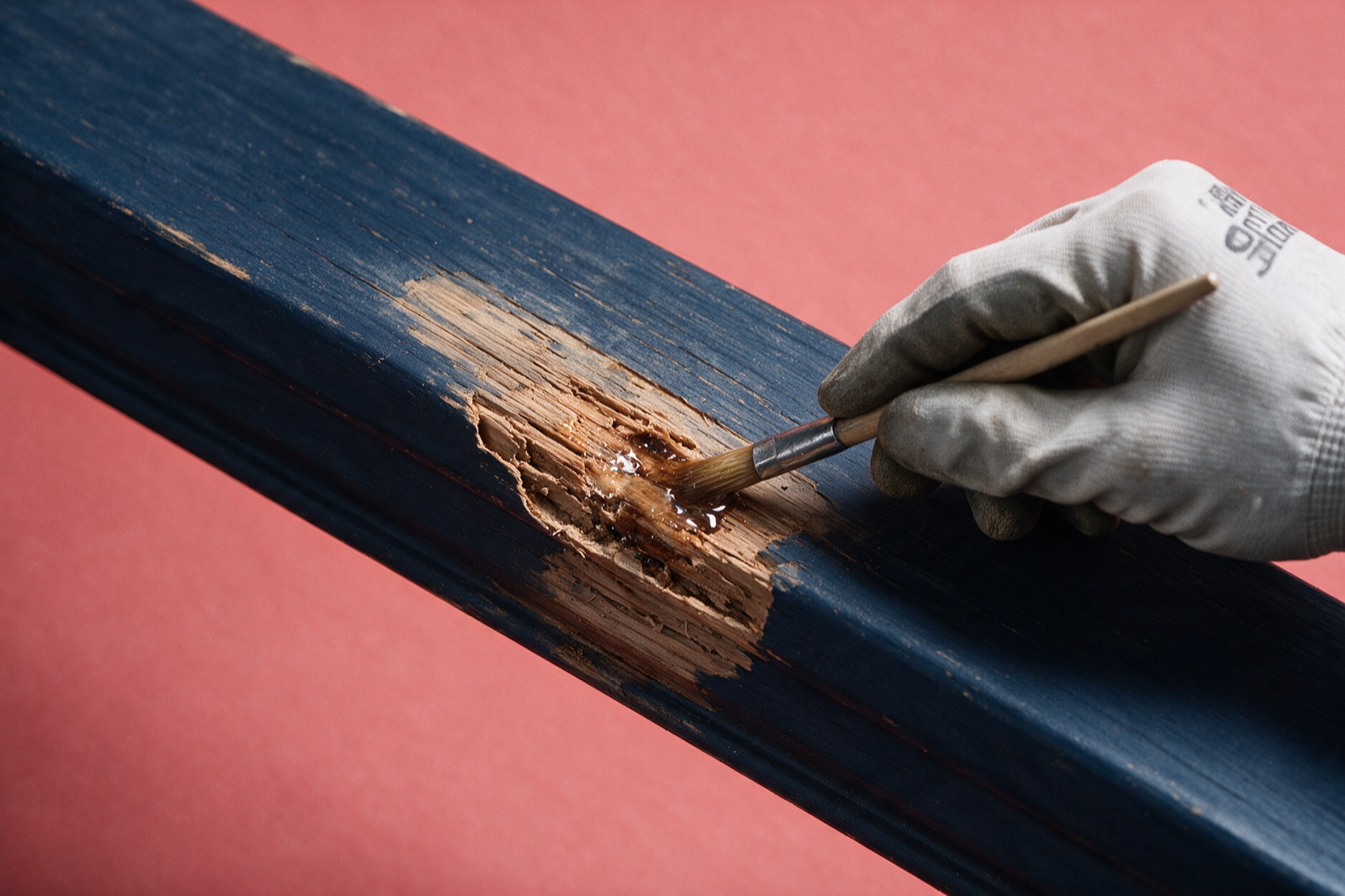
The most reliable field test available to a homeowner is what we call the Poke Test: press a flathead screwdriver firmly into the wood. Solid wood resists. Rotted wood gives way easily, often sinking a quarter inch or more with minimal pressure. A step further, the Pick Test, involves digging the tip into the grain and prying out a small piece. Healthy wood splinters in long pieces with a clean snap. Rotted wood crumbles out in short clumps, almost without resistance.
Beyond isolated spots, a floor or deck that feels bouncy or spongy underfoot, or a railing that’s become wobbly, points to rot in the structural members underneath, not just a surface issue.
What You’ll Smell
Active decay produces a distinct, musty, earthy odor, similar to mushrooms, as the fungi digest the wood. A persistent smell like this in a crawl space, basement, or under a sink that doesn’t trace back to an obvious cause is worth investigating further, even without visible signs yet.
Where to Look First in a Vancouver Home
Rot concentrates at specific, predictable points rather than spreading evenly, mainly anywhere water collects, lingers, or gets trapped against wood.
Windowsills and brickmolds.
Horizontal sills hold water with almost no pitch to shed it, and brickmold trim, typically unsealed pine, wicks moisture upward from the sill below.
Door jambs and thresholds.
Jambs sit half-exposed to weather and, like brickmold, are usually porous pine prone to wicking. Thresholds are a direct, ground-level water-collection point every time it rains.
Fascia, soffits, and rooflines.
Fascia sits directly beneath the roofline, the first wood surface water reaches, and gutter hardware punches holes straight into it. Blocked soffit vents trap humidity inside an enclosed cavity, rotting panels from the inside even when the exterior paint looks fine.
Deck ledgers, posts, and stair stringers.
The ledger board, where a deck bolts to the house, is frequently under-flashed, letting water track behind it. Stringer bases near ground contact are some of the fastest-failing points on any deck.
Siding near ground level.
Splash-back from rain keeps this band wetter longer than siding higher up the wall, and landscaping growing against it compounds the problem.
Sill plates and rim joists.
In the crawl space or foundation area, particularly common in Vancouver’s older housing stock, this is the most serious category, since these are continuous, load-bearing members.
For the full breakdown of each of these, including exact testing methods and moisture thresholds for each location, see our complete inspection checklist.
Wood Rot, Mold, or Something Else
Not everything that looks like rot is rot. Mold grows on a material’s surface without necessarily consuming the structural wood underneath, which makes it primarily a surface and air-quality issue rather than a structural one. Water staining without any softness on a Poke Test can simply be cosmetic discoloration from a past, minor event. And peeling paint or sun-baked caulk can make perfectly healthy wood look decayed from a few feet away.
The Poke Test is the fastest way to sort these out in the field. For the full comparison, including how termite damage fits in, see our guide: Is It Rot?
The Complete Diagnostic Guide.
What to Do Once You’ve Found Something
The moisture source that caused the rot almost always needs addressing before the wood itself does. Repairing or replacing rotted wood without fixing what let the water in tends to mean the same problem returns, in the same spot, since the underlying condition was never resolved.
From there, the extent of the damage determines whether repair or replacement is the right call, a decision best made from an actual moisture-meter reading rather than a visual guess.
Not sure what you’re looking at?
That’s exactly what a free inspection is for.
Our full Is It Wood Rot? guide walks through the same checks in more depth, with real examples for each one.
Sources: CBC News, citing Environment Canada meteorologist Chris Doyle (2024 Vancouver precipitation data); Environment and Climate Change Canada, Canadian Climate Normals; Canada Mortgage and Housing Corporation (CMHC), Guidelines for On-Site Measurement of Moisture in Wood Building Materials; Canadian Wood Council, durability and decay research.